

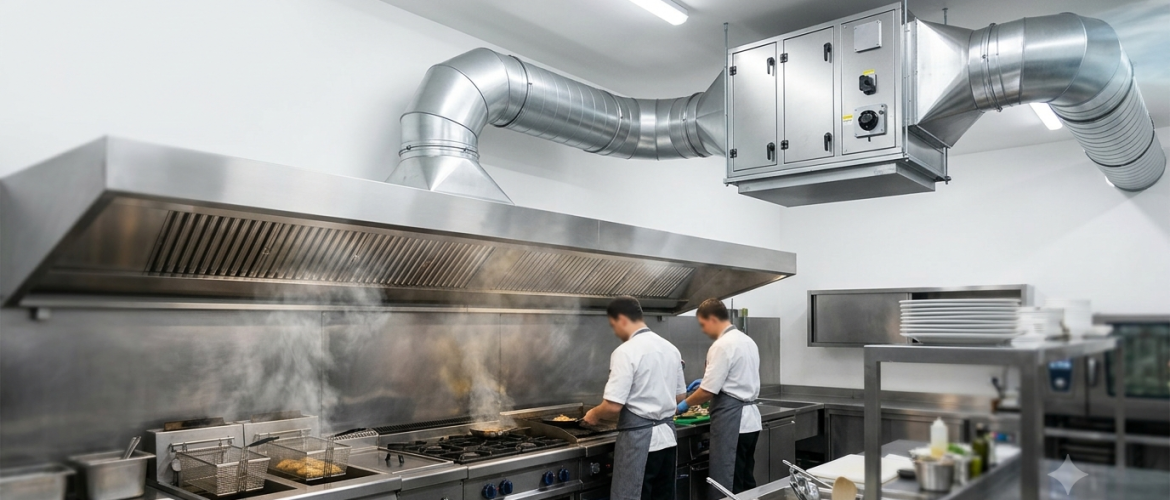
Running a successful restaurant involves much more than preparing delicious food and delivering excellent customer service. Behind every busy commercial kitchen is a ventilation system working continuously to remove heat, smoke, grease, steam, and cooking odors. As restaurants increase their cooking capacity, maintaining clean indoor air and complying with environmental standards become equally important.
One of the most effective technologies used in modern Commercial Kitchen Ventilation is the Electrostatic Precipitator (ESP). Unlike conventional grease filters that primarily capture larger grease particles, an electrostatic precipitator removes fine smoke, grease mist, and airborne contaminants before they are released into the atmosphere. This not only improves air quality but also helps restaurants operate more efficiently while minimizing maintenance issues.
Whether it’s a hotel kitchen, cloud kitchen, café, fast-food outlet, or fine dining restaurant, installing an Electrostatic Filter within the Kitchen Exhaust System has become an essential investment rather than an optional upgrade.
In this article, we’ll explore how electrostatic precipitators work, why restaurants need them, and the advantages they offer for kitchen operations, environmental compliance, and long-term cost savings.
Understanding an Electrostatic Precipitator
An Electrostatic Precipitator is an advanced air purification device designed to remove extremely fine grease particles, smoke, oil mist, and airborne pollutants generated during cooking.
Unlike standard mechanical filters that physically trap contaminants, an electrostatic precipitator uses electrical charges to capture microscopic particles suspended in the exhaust air. This technology allows restaurants to achieve significantly higher levels of air purification while maintaining consistent airflow through the ventilation system.
The result is cleaner exhaust emissions, reduced grease buildup, and a healthier working environment inside the kitchen.
Why Commercial Kitchens Produce Challenging Air Pollutants
Commercial kitchens operate under demanding conditions throughout the day. High-temperature cooking methods such as frying, grilling, roasting, baking, and charbroiling generate large amounts of airborne contaminants.
These include:
Grease Mist
Tiny oil droplets released during cooking can travel throughout the exhaust ductwork and accumulate over time.
Smoke
Continuous cooking creates smoke particles that are difficult to remove using conventional grease filters alone.
Cooking Odors
Strong food odors can spread into dining areas, neighboring buildings, or surrounding commercial spaces without proper filtration.
Heat and Steam
Cooking appliances release large amounts of heat and moisture that require effective extraction.
These contaminants make an efficient Commercial Kitchen Ventilation system essential for every restaurant.
How an Electrostatic Filter Works
The operation of an Electrostatic Filter follows a simple but highly efficient process.
Air Collection
Cooking fumes enter the Kitchen Exhaust System through the kitchen hood installed above cooking equipment.
Particle Charging
Inside the electrostatic precipitator, airborne grease, smoke, and fine particles receive an electrical charge.
Particle Collection
The charged particles are attracted to collector plates carrying the opposite electrical charge, where they remain attached instead of passing through the system.
Clean Air Discharge
Once contaminants have been removed, significantly cleaner air exits the exhaust system.
Because the process targets microscopic particles, electrostatic filters provide much higher filtration efficiency than conventional mesh filters alone.
Why Restaurants Need Electrostatic Precipitators
Restaurants today face increasing expectations regarding hygiene, air quality, and environmental responsibility. An Electrostatic Precipitator addresses multiple operational challenges simultaneously.
Superior Smoke Removal
Heavy cooking generates smoke that can quickly affect both employees and customers.
An electrostatic precipitator removes extremely fine smoke particles before they leave the building, improving both indoor and outdoor air quality.
Better Grease Control
Grease particles may seem harmless initially, but over time, they accumulate inside ducts, exhaust fans, and ventilation equipment.
Removing grease at an early stage helps maintain cleaner ductwork and reduces maintenance requirements.
Improved Kitchen Environment
Cleaner air creates a more comfortable workspace for chefs and kitchen staff by reducing airborne contaminants circulating throughout the kitchen.
Reduced Odor Emissions
Restaurants located inside malls, mixed-use buildings, or residential areas often receive complaints about cooking odors.
Electrostatic filtration significantly reduces odor-carrying grease particles before exhaust air is discharged.
Environmental Compliance
Many commercial developments require restaurants to control grease emissions and maintain cleaner exhaust systems to comply with local environmental guidelines.
Installing an electrostatic precipitator helps businesses meet these expectations more effectively.
The Role of Commercial Kitchen Ventilation
A properly designed Commercial Kitchen Ventilation system performs several essential functions beyond simply removing smoke.
It helps:
- Remove excess heat
- Control humidity
- Improve indoor air quality
- Maintain employee comfort
- Extract grease-laden vapors
- Reduce airborne contaminants
- Protect kitchen equipment
When paired with an Electrostatic Filter, the overall ventilation system becomes significantly more effective at maintaining a clean and healthy kitchen environment.
How Electrostatic Precipitators Protect the Kitchen Exhaust System
The Kitchen Exhaust System consists of hoods, ducts, fans, filters, and exhaust outlets that operate continuously throughout restaurant working hours.
Without effective filtration, grease gradually accumulates inside these components.
This can lead to:
Reduced Airflow
Grease deposits restrict airflow, reducing ventilation performance.
Higher Maintenance Costs
Dirty ductwork requires more frequent professional cleaning.
Increased Equipment Wear
Fans work harder when airflow becomes restricted.
Greater Fire Risk
Grease accumulation inside exhaust ducts increases the possibility of fire spreading through the ventilation system.
By removing fine grease particles before they reach the ductwork, electrostatic precipitators help maintain cleaner exhaust systems for longer periods.
Benefits of Commercial Kitchen Air Filtration
Effective Commercial Kitchen Air Filtration provides advantages that extend well beyond cleaner exhaust air.
Improved Employee Comfort
Lower smoke concentrations create a healthier working environment for kitchen staff during long operating hours.
Cleaner Indoor Spaces
Reduced airborne grease helps keep ceilings, walls, lighting fixtures, and kitchen surfaces cleaner.
Better Customer Experience
Restaurants benefit from fewer cooking odors reaching dining areas or building entrances.
Longer Equipment Life
Cleaner ventilation equipment experiences less grease buildup and operates more efficiently.
Lower Cleaning Frequency
With fewer contaminants entering the duct system, maintenance intervals can often be optimized.
These operational improvements contribute to smoother day-to-day restaurant management.
Restaurants That Benefit Most from Electrostatic Filters
Although every commercial kitchen can benefit from improved filtration, certain operations produce especially high levels of grease and smoke.
These include:
Fast Food Restaurants
Continuous frying generates significant grease particles.
Charcoal Grill Restaurants
Open-flame cooking creates dense smoke and fine carbon particles.
Hotel Kitchens
Large-scale meal preparation requires high-capacity ventilation systems.
Cloud Kitchens
Multiple cuisines operating simultaneously generate diverse cooking emissions.
Barbecue Restaurants
Grilling meat produces grease vapors that require advanced filtration.
Asian Cuisine Restaurants
High-temperature wok cooking generates smoke rapidly.
For these operations, Commercial Kitchen Air Filtration plays an especially important role in maintaining air quality.
Choosing the Right Electrostatic Precipitator
Every restaurant has different cooking volumes and ventilation requirements.
Several factors should be evaluated before selecting an Electrostatic Precipitator.
Kitchen Size
Larger kitchens require systems capable of handling higher airflow volumes.
Cooking Equipment
Deep fryers, grills, ovens, and wok stations generate different types of contaminants.
Exhaust Air Volume
System capacity should match the total exhaust airflow produced by the kitchen.
Maintenance Accessibility
Collector plates should be easy to remove and clean.
Installation Requirements
Available duct space and ventilation layout influence equipment selection.
A properly engineered solution ensures maximum filtration efficiency without restricting airflow.
Best Practices for Maintaining Electrostatic Filters
Like any ventilation equipment, electrostatic precipitators require regular maintenance to maintain peak performance.
Clean Collection Plates
Grease deposits should be removed periodically according to kitchen usage.
Inspect Electrical Components
Power supplies and charging sections should be checked during routine servicing.
Monitor Airflow
Reduced airflow may indicate excessive contamination or maintenance needs.
Schedule Professional Inspections
Routine inspections help identify wear before performance declines.
Follow Manufacturer Recommendations
Cleaning intervals vary depending on cooking intensity and operating hours.
Consistent maintenance helps preserve filtration efficiency while extending equipment life.
Common Misconceptions About Electrostatic Precipitators
Some restaurant owners hesitate to install electrostatic systems due to common misunderstandings.
“Standard Grease Filters Are Enough”
Traditional filters capture larger grease droplets but allow many microscopic particles to pass through.
“Electrostatic Systems Restrict Airflow”
Properly designed electrostatic precipitators maintain excellent airflow while improving filtration.
“They Require Constant Maintenance”
Routine cleaning is necessary, but maintenance schedules are manageable when incorporated into regular kitchen servicing.
“Only Large Restaurants Need Them”
Even smaller commercial kitchens can benefit from improved air quality, cleaner ductwork, and reduced grease emissions.
Understanding these facts helps restaurant owners make informed decisions about ventilation upgrades.
A Long-Term Investment in Kitchen Performance
Installing an Electrostatic Precipitator is about more than improving exhaust air quality. It contributes to better workplace conditions, protects ventilation equipment, reduces grease accumulation, and supports smoother day-to-day kitchen operations.
When integrated into a well-designed Kitchen Exhaust System, electrostatic filtration enhances the efficiency of the entire ventilation network. Combined with effective Commercial Kitchen Ventilation and reliable Commercial Kitchen Air Filtration, it creates a cleaner, safer, and more sustainable environment for employees and customers alike.
As restaurant operations continue to grow and environmental expectations become more demanding, investing in advanced air filtration technology is a practical step toward maintaining high operational standards.
Conclusion
A clean and efficient kitchen begins with effective air management. An Electrostatic Precipitator helps restaurants tackle smoke, grease, and airborne contaminants at their source, resulting in cleaner exhaust systems, improved indoor air quality, and a safer working environment. By incorporating advanced Electrostatic Filter technology into a well-designed ventilation setup, restaurants can enhance operational efficiency while reducing long-term maintenance challenges.
At Rapid Cool, we understand that every commercial kitchen has unique ventilation requirements. Our team delivers customized Commercial Kitchen Ventilation and Commercial Kitchen Air Filtration solutions that are engineered to suit the size, layout, and cooking demands of your facility. Whether you’re setting up a new restaurant or upgrading an existing Kitchen Exhaust System, we provide reliable, high-performance solutions designed to support cleaner air, regulatory compliance, and uninterrupted kitchen operations for years to come.
